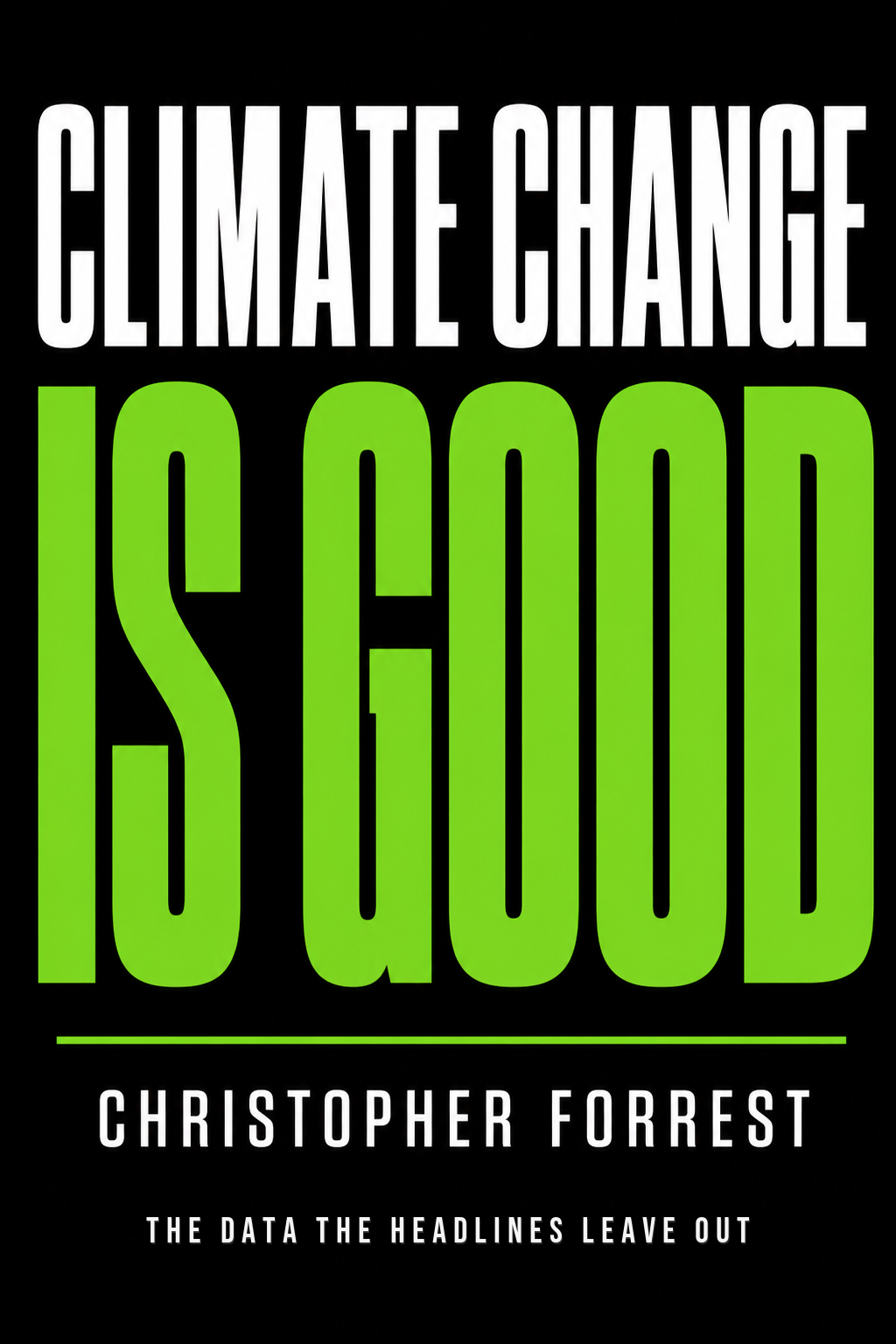
Most people are offered two positions on climate change: accept that it is an existential threat, or deny that it is happening. Climate Change Is Good rejects that false choice.
The climate is changing. Some consequences are harmful. Others are positive, measurable, and enormously important. Those benefits do not erase the risks, but they belong in any honest account of what a warmer, more CO₂-rich world is doing.
This book examines the evidence that rarely makes the headlines:
- The planet is getting greener. Satellite records show significant greening across roughly 25–50 percent of the world’s vegetated land since the early 1980s. Attribution research identifies rising atmospheric CO₂ as the largest driver of the global trend.
- More CO₂ can help plants grow. Elevated CO₂ can increase growth and improve water-use efficiency in many crops, including wheat, rice, soybeans, and potatoes. Warming also lengthens growing seasons and reduces frost exposure in many colder regions, although heat, water, nutrients, pests, and location still determine the final harvest.
- Cold remains a much larger killer than heat. In the cited 2000–2019 global record, the modeled cold-related death burden was roughly nine times the heat-related burden. Most of those deaths occurred during moderately cold weather, not dramatic freezes. Fewer cold days can therefore save lives.
- Milder winters reduce heating demand. Heating-degree days have declined across many northern regions, reducing the amount of energy households and utilities need to keep buildings warm.
- A less-frozen Arctic creates new economic options. Shipping seasons are lengthening, vessel traffic is increasing, and some Europe–Asia routes could become substantially shorter. Retreating ice also changes access to energy resources and critical minerals, although physical access does not guarantee safe or profitable development.
- Human beings are becoming harder to kill. Warning systems, infrastructure, medicine, forecasting, and emergency response have driven disaster death rates dramatically downward. That achievement is human adaptation, not a direct benefit of warming, but it changes the real-world consequences of climate hazards.
This is not an argument that every climate effect is good or that every region will benefit. It is an argument that a verdict built only from harms is incomplete.
Climate Change Is Good puts the benefits, costs, opportunities, adaptations, uncertainties, winners, and losers into the same ledger. Then it asks readers to confront the full record.
Does that make you uncomfortable? Good. Read the evidence before you decide it is wrong.